Australia is a case in point. Why Australians are opposed to nuclear is history. What's current is that sufficient pace in other forms of energy mean any deployment of nuclear will be too late to mitigate AGW and the same spend on renewable energy would work as well and even be net cheaper.
The science of nuclear is fine. Because of history, the timing is awful.
I think this is a decent idea - build the reactor in granite and if there is a problem, just pour concrete down the borehole.
Instead of over-engineered "safety" with the reactor is mixed in with the population on the surface, just put it out of reach where it is safe.
I think this should cut costs, and allow EXPANSION of power capability. We could not only keep up, but replace and obsolete fossil fuels (which also dig up the ground, and are used to burn once)
I think the world could really be a lot cleaner and safer with plentiful cheap power.
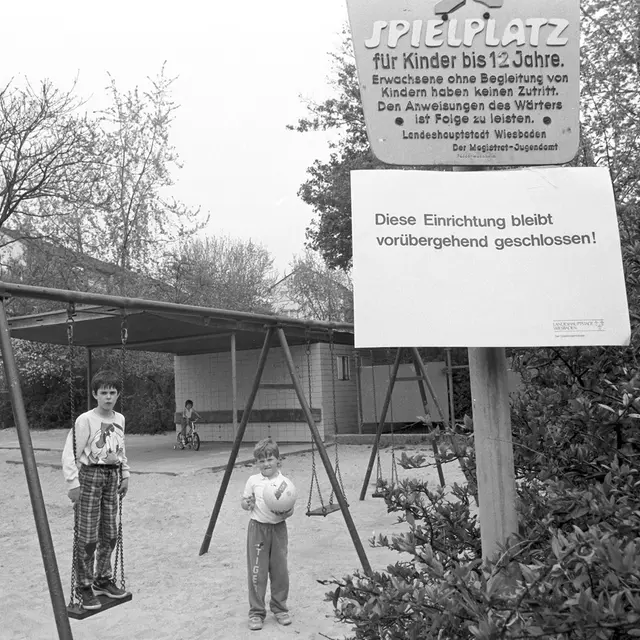
In Germany anti-nuclear movements were often highly regional, related to radioactive waste sites, Chernobyl and cold war trauma. It has an impact when you tell a generation that they should stay inside, should not drink milk or eat mushrooms.
Relevant article: https://www.bpb.de/shop/zeitschriften/apuz/333362/kleine-ges...
For climate activists, the byproduct is CO2 emissions, and it harms the planet through the mechanism is global warming.
For anti-nuclear folks, the byproduct is radioactive waste, and it harms the planet through mechanisms like long-term leakage, accidents, and meltdown.
And accidents and meltdowns in the newest generation reactors afaik are mitigated concerns. Even the old reactors are still running without issues. Even Fukushima wasn’t terrible all things considered, all credit to the heroes involved that contained it.
Well, in Germany the end of the atomic age was made law by conservatives. Not by lefts.
I actually detest the idea that some people have to press any complex problem into left / right drawers. Maybe it even worked for your own country. But on a global level it's almost always wrong.
Over here in Germany several things happened:
* a general fear of the public in the 1980s due to a nuclear winter ... I mean, the russians and the 'muricans saw Germany as an planned atomic waste field should WW3 break out. Tactical nuclear weapens were meant (!) to devastate the land to hinder troops marching. I agree that the left boosted this fear out of propertion. But at the same time, things like Pershing or Lance rockets with their atomic heads were facts. The estimated max distance of the Lance: 145 km. So it would devastate Germany in any case, no matter if east or west Germany. In case you don't know: Germany was divided into a socialist and a social-market-economy state. Before 1955 a lot of people escaped from the west to the east. But even in 1980 there were a lot of family relations. Few people in West Germany like the idea that East Germany would become atomic wasteland. Or their own are, e.g. the Fulda Gap. Some people accepted atomic bombs grudgingly because of reasons (their mere existence made Russia not attack, I even claim that they wouldn't have attacked Ukraine if Ukraine would have kept their atomic rockets). But surprise surprise: a lot of people decide based on feelings, not on ratio. So more and more people were against "anything atomic": bombs or plants.
And then ...
* Chernobyl happened. People were told to stay inside. Playgrounds closed. You couldn't eat some meat anymore (e.g. wild like boar or deer), no blueberries, no mushrooms. The russians weren't open about it --- increasing a feat that the anti-atomic-power people always had: they said that the governments shush down the incidents. And maybe the "German Angst" was born these days. It created an effect similar (but much smaller!) to COVID-19.
By now it was that mostly the german local and federal governments were for atomic energy. But polls of the the majority of the population were against it. And then ...
* Fukushima happened. In Germany, Japan is seen to be somewhat similar to Germany. Risen from rubble, betting on hard work and technology. Having an esteem of being meticulously correct, on time etc etc etc. And now this technological workhorse demonstrated first-hand that the even they can't protect their people against the risks of atomic power.
And that made the german conservatives (CDU) finally swing into what the general public thought since 10+ years and they finished the way out of Germany via law.
So the german stance atomic plants can't really be attributed to some left-extremist commune people wanting to erect a new society. That's so blatantly wrong that I doubt anyone postulating some in this marks have a know at all.
And even today only 22% of the germans want that the turned-off atomic plants should be "started again".
There is anti nuclear among fossil fuel industry supporters too.
There are only people who are against nuclear. Some of them are "climate activists". Some are fossil fuel shills. Some are crunchy, hippy, back to nature types. Some are prepper, survivalist, hyper-individualist types. There isn't anything uniting them except their opposition to nuclear energy. If you put them in a room they'd be at each other's throats.
The fossil fuel industry has found it convenient to fund anyone and everyone who opposes nuclear energy.
Nuclear was never able to beat fossil fuels on pure economics. It still can't. And the fossil fuel industry spent billions and decades lying to us about carbon emissions. So there was never a strong reason to adopt nuclear energy over fossil fuels.
If we look at France, we see that just ONE block of an atomic plant is now super-expensive. So far the cost Flamanville is now at 23 billion EURO. This makes the economy simply not work out. You need to sell a kWh for 14 cents for the duration of 60 years uninterrupted to make a profit of 4%. But given the real times (e.g. outtages because in the summer the rivers have to little water for cooling now, or even regular scheduled maintenance outages) the kWh must be priced at 14 cent. However, the industry price for electric power in France was at 4.2 cent in 2025. People are arguing that it has to rise to 7.2 cent DUE TO ATOMIC POWER.
And that means: if you want atomic power, then it must be subsidized.
And since most atomic plants are economically unfeasible the french EDF (which bet heavily on nuclear) is now under government control to not get it bankrupt ... they now have debts in the size of about 50 billion EURO.
Which ultimately means that the pro-atomic power people want a system change: towards more "socialism".
Other atomic blocks (again, not whole plants!) are similar, e.g. Hinkley Point C or Olkiluoto. So it's a not some french single miscalculation.
Note that above I've not mentioned anything ecological. Or nothing about the cost of storing the atomic waste safely for centuries --- I mean, just two weeks ago the CIA aired rumors that some Mullah Regime could blow up a "dirty bomb". That this is thought to be possible means that the radioactive waste needs to be protected against 9/11 like criminal gangs!
But hey, if you want to do nuclear go ahead. With your own money. Get together with all the other nuclear fans and invest in a plant yourself.
But not a single penny of government subsidy, no guaranteed prices, nothing. You sell your electricity on the open market like all the others.
That way you can prove how cheap it really is and make a profit from your investment.
No? Thought not.
Democracy does not work like that. I do want government support for nuclear. You don't. Some people are like me, some like you. It looks like right now more people are like me, at least in the state of New York, where I live, and the government enacts policies accordingly, [1].
[1] https://www.governor.ny.gov/news/governor-hochul-announces-c...
[deleted]
That's wrong.
And one of the most widespread damaging take. Both against electrification and the climate change fight ever.
If you consider that no country in the world can afford battery storage for a dunkelflaute of few week. Meaning, that you need to construct a Gas backup at least as large as your peak consumption in any full-ENR infrastructure.
Nuclear is de facto still the cheapest solution available at the grid scale.
That is just an economical fact.
Economist loves to brag about how cheap solar is in LCOE price model. And use it as an argument against Nuclear.
This is completely irrelevant.
The grid need to to reasoned in term of maximum instant power consummed not in term of average energy price.
If your LCOE price is cheap but you need to do the ROI of your giant backup Gas infrastructure through subsidies just to answer to this max peak consumption during Dunkelflaut... You are not cheap, you are lying to yourself.
It's an energy that unfortunately emerged out of the research on the most destructive weapon invented by human kind.
That is fear, and fear is never rational
System studies from Australia to Denmark are converging on finding that new nuclear makes the system vastly more expensive. Even when assuming "NOAK" costs. Because no one would be stupid enough to build new nuclear at Vogtle or Flamanville prices.
Because the problem for nuclear is that it never solved dispatchability. It always relied on fossil fuels to solve the hard times.
Nuclear power raises the floor, but that's quite meaningless when the hard times are far far above the yearly baseload requirement. Even when factoring in scheduling maintenance around it. And theen adding that your nuclear fleet may be like the Swedish or French one and have half the capacity offline when it is needed.
And trying to suggest peaking nuclear plants with correpsonding capacity factors is absolute economic lunacy.
Which country can afford a fleet of nuclear power plants which would cover a dunkelflaute, so 100% of a typical demand, at current prices of a nuclear power plant (for bonus points, add delays and cost overruns typical for nuclear, and temporary sources while the plants are built)?
Everyone keeps acting like we have reached peak energy usage, except all signs point to us even significantly more energy into the future. And if we want to reverse CO2 in the atmosphere that is an entire magnitude more energy. To produce fertilizer cleanly we need to use over 10% of the world's energy production to make it without fossil fuels. If we want other plastics and polymers made without fossil fuels, that's even more on top.
Hell we are still running coal power plants today, so to me it is clear we are still not over the hump for power generation needs and won't be for some time yet.
It is really frightening how naive and uninformed people still are in regards to climate change: https://www.youtube.com/watch?v=ncx_zxmdwOQ
Building nuclear during a collapse of society is obviously neither possible nor a good idea.
> Nuclear can be much cheaper than renewables+storage in a grid without fossil fuels, especially if we commit to build a lot of plants together instead of one-offs
I think in the absence of some kind of materials science breakthrough that makes radiation a non-issue, nuclear will always be more expensive than renewables + storage.
See https://news.ycombinator.com/item?id=50216776. Even the nuclear industry admits wind is cheaper than nuclear.
Nuclear may still be a profitable choice in certain niches, high latitudes or crowded islands perhaps, and nuclear plants will continue to be built for national-security/prestige reasons, but there is no reason we should expect any more large-scale public investment in nuclear power.
Over here, Nuclear is pushed by fossil fuel interests. All Nuclear proposals include refurbishing old and building new gas plants to keep the lights on until the nuclear plants are built. And nobody looking at the proposals actually expects the reactors to actually be built; that isn't the point of them. Just this week we are subjected to photos of a small reactor the size of a dishwasher sitting on the back of a pickup truck from politicians pushing snake oil and wishful thinking, trying to make public funds disappear into the right pockets. At that is why climate activists over here are against nuclear; because the only nuclear proposals we see are complete bullshit.
Nuclear probably makes sense in more closer to the poles, because of seasonal variation in sun and the intermittency of wind.
Round the equator, solar makes much more sense.
Fundamentally we need to build all of these things and lots of good transmission infrastructure if we want to build a better, cheaper, more sustainable society.
Do you know that any solar cell plant blew off like Fukushima or Chernobyl? That is what I'd call "massive".
My country is very densely populated. A similar issue would impact millions of people.
Those explosions while dramatic are based on really old designs with known flaws that hadn’t been corrected / retrofitted designs. Modern reactors are drastically safer. Also, even including mining and Fukushima and Chernobyl, the death rate per TWh of nuclear and solar is basically the same, especially when compared with coal and natural gas.
Generally nuclear accidents occupy far more paranoia in people’s minds than the actual damage it caused. Death rate per TWh of production, including the nuclear accidents, is largely the same as solar. This is also ignoring that modern plants are even safer in terms of not having fail unsafe chain reactions like the older designs Fukushima and Chernobyl are built on or even lacking the improvements on those old designs that have been around forever. We can build safe reactor plants now and pretending like we can’t is ignorance. Pretending like it’ll kill millions comes from movies not reality.
In what ways does it "permanently" alter the ecology? I'm aware of positive effects in agriculture, and giving animals more options for shade will become important as peak temperatures rise. But these effects aren't permanent, so what are you thinking of?
> People install it in the desert to keep it away from populated centers and play the “the desert is ecologically dead” argument which is blatantly untrue.
Uh, no? People install it in deserts because they receive more sunlight than most other places. It would again help if you could explain what negative effects you're alluding to, as I could well imagine the additional options for shade being a huge boon to the local biosphere.
In comparison, nuclear plants along rivers now have to be turned off during the summer, or they'll cook the river ecosystem.
Oil & gas working against nuclear has been ongoing for years https://world-nuclear-news.org/articles/gloves-are-off-in-fo...
Astroturfing https://climatecoalition.org/how-american-petroleum-institut...
Fake news https://www.forbes.com/sites/jamesconca/2017/06/15/natural-g...
Suddenly oil&gas polluters care about environment https://energy-oil-gas.com/news/oil-and-gas-producers-push-b...
[deleted]
You can easily tell the difference, as the latter are never interested in technical details and solutions, they just want to complain endlessly and always conclude with "and that's why we have to abolish capitalism" or something like that.
(A week ago I had a demonstration exactly like this in my town. They named a list of problems -- climate, AI, etc. -- and each of those problems had exactly the same solution.)
Example: They paid $1B to not build the wind energy under contract in swing states:
https://www.theguardian.com/us-news/2026/jun/02/lawsuit-trum...
They bought out billions of green energy under contract so they wont produce. Who benefited? tell me
https://www.taxpayer.net/energy-natural-resources/five-fast-...
Don't be naive in believing that it is activists that are behind it all.
As for Ai they went full blast of development for the last 4 years sucking up massive energy, what entity supplies the energy do you think? I give you another clue, it is not wind and solar.. Most of them either suck the energy from the grid that use oil and gas or they locally power it by oil and gas..
https://www.technologyreview.com/2026/11/24/1149622/data-cen...
We have lots of ways to store excess energy now. Seems reasonable to pursue.
Seems kind of backwards to give the highest initial capital investment energy generation nothing while the dirt cheap to start up generation that pollutes is still given tons of money.
Solar and battery needs less and less subsidies and incentives every year. At one time it did need subsidies because large scale manufacturing hadn't yet driven down its costs.
Subsidies are different from an insurance backstop. No private insurance company in the world will insure a nuclear power plant for an accident beyond a certain point. They either cap the damages in dollars or by geographical area (X distance from the plant).
They do this because the cost and scope of cleanup are absolutely massive. Chernobyl purportedly brought down the Soviet Union. Fukushima cost north of $100 billion. Governments are the insurer of last resort everywhere nuclear has been built, afaik.
Solar and battery storage have some risks (most notably the batteries catching fire sometimes) but they are all contained, manageable, and privately insurable.
It's pretty impossible to keep it running on full tilt. Why? In europe, due to climate change, the rivers almost have no water anymore in the summer. And thus you can't use them to cool down the steam after it passed the turbine. Many countries have to turn off nuclear plants during the summer.
It's also only cheap if you don't pay the full costs. How to you finance the storage of the nuclear waste? We need to think currently in centuries here. Just think how the world looked like 2 or 3 centuries ago. Would some company back then succeeded in saying "We product poison, but we store it safe away and pay for for several centuries. No problem!".
There are technologies "around" to breed the waste into something usable. But they are as "around" as nuclear fission is. Since 50+ years "ready in 10 years".
And breeding reactors are expensive, too. Kalkar in Germany was abandoned due to cost issues after all.
> We have lots of ways to store excess energy now
Actually we don't. At least not in Europe. And that's IMHO the biggest drawback of renewable energy. However, technological advancement in the storage area seem to be way faster than then in the nuclear fission area, so I've not yet lost my hope.
Recent CFD auctions in Germany, where they don’t get paid during negative price periods, have come in below the expected market value of the produced electricity.
In other words. The auctions aren’t pricing renewables anymore, they are pricing the market risk. And that is Germany, with worse renewable production than a majority of the world.
I also don’t understand where you get that nuclear is better at tackling CO2 emissions from? Existing nuclear is amazing.
But for new investments we get vastly more cumulative emission reduction per dollar spent with renewables and storage. And it’s online in months or years rather than decades.
I can even oppose the propaganda you've been exposed to and say I don't like capitalism.
I don't think we should be fighting nuclear. We should build it where it makes sense. But we should dispel the idea that it removes dependency on foreign fuel suppliers.
As I said in other comments: In Germany anti-nuclear movements were often highly regional, related to radioactive waste sites, Chernobyl and cold war trauma. It has an impact when you tell a generation that they should stay inside, should not drink milk or eat mushrooms. Playgrounds were closed etc. https://www.gettyimages.de/detail/nachrichtenfoto/closed-off... https://images.tagesschau.de/image/c1110a4a-a9da-40fb-b611-a...
When people chained themselves to the railroad tracks to protest the nuclear waste transports, they didn't think about abolishing capitalism. At least not my parents nor grandparents did so when protesting and getting fined for it.
Chernobyl was a COVID like cultural moment in Germany.
But betting one only one source isn't political or economical sound.
Then things like Flamanville (FR), Hinkley Point (UK), Olkiluoto (FI) are examples of how expensive even ONE nuclear block is. I mean, not even a whole nuclear plant. It's so expensive to produce that the french EDF now has so many debts --- the production price for atomic power is higher than the market price -- that the state has to bail it out. It's now under state control.
On top, atomic plants become less and less feasible in Europe due to climate change. Our rivers simply don't have enough cooling water anymore. In the summer, a lot of thermo-based plants have to reduce their power or fully turned off due to little water. This is coal, gas .. but also nuclear. In France they once had to turn of more than 50% of their atomic plants. It's only that the people didn't notice because the european power grid is highly interconnected and the neighboring states helped them a lot ... against hard EURO, of course.
However, if a block cost 25+ billion euro and you already know that you can't operate it as designed, than the cost per kWh just increases. Above (!) market prices. So in countries where the government doesn't subsidize atomic power the big electric companies like EON, RWE, Vattenfall or EnBW have zero plans to build new atomic plants.
Asking for full-scale subsidizing of all costs (planning, building, operating, deconstruction, warehousing/treatment of the nuclear waste) however is nothing more as ... socialization. A leftist system change attempt.
This guy doesn't think wind and solar work so he needs a complicated explanation for why they are being adopted faster than nuclear.
China aligns nuclear reactor like Legos on budget and on time. The fact the west fucked up its nuclear industry knowhow after 30 years of Tchernobyl FUD is only the fault of the west (and repairable).
> System studies from Australia
What to believe? The IEA and IAEA who have many rapport that say the opposite. Or the Australian gov that has one of the biggest coal industry of the planet ?
> Because the problem for nuclear is that it never solved dispatchability. It always relied on fossil fuels to solve the hard times.
Thats bullshit and thats solved. Many nuclear countries including the one I quoted previously have currently some of the lowest fossil capabilities world wide. This is debunked by fact.
> Nuclear power raises the floor, but that's quite meaningless when the hard times are far far above the yearly baseload requirement.
Thats non sense. Produce your baseload in Nuclear and it is 50% of your electricity at 5gCO2/kwh. And as much capacity that does not require battery nor gas plant.
> and have half the capacity offline when it is needed.
Any plant can be offline when you need it. Spot price last week (19/11) spikes to a non-sensical 750€/MWh in Germany because some coal plant could not start and a Dunkelflaut was ongoing.
China gives nuclear advocates almost everything they demand: cheap capital, centralized planning and standardized reactors. Yet nuclear remains a tiny share of Chinese electricity, 4% and shrinking, while wind, solar and storage explodes in scale.
You're confusing baseload with dispatchability. Electricity demand swings wildly. Nuclear output doesn't follow it economically. France and Sweden rely on hydro, imports and other flexible resources. You can't just put two French grids next to each other and expect them to balance.
Even EDF is struggling with renewables forcing its reactors to load-follow, undermining their economics.
Most importantly, existing nuclear isn't new nuclear.
Look at Flamanville 3. Look at EPR2's interest-free state loans and decades-long price guarantees, plus the now expected €65 billion in forgone EDF dividends. And those estimates already assume substantial learning effects.
A temporary €750/MWh price spike doesn't justify guaranteeing expensive nuclear electricity around the clock for decades.
The question is cumulative CO₂ avoided per euro invested in 2026. The answer that evidently is not new nuclear.
Nuclear has, and always has had, one giant problem: It's called nuclear waste.
One small example, here in Southern California, we just decommissioned a nuclear plant after decades of operational life. All of the spent nuclear fuel, ever used during the entire operation of the plant, was still onsite in holding ponds.
And since noone, I mean noone, wants spent nuclear fuel in long term storage anywhere near where they live, this spent fuel, like all other spent fuel was dumped into "long term storage" onsite.
This means, it was literally buried in the sand, right next to the ocean, and over an active tectonic fault line 8-/
What could go wrong, Fukushima?
https://timesofsandiego.com/environment/2026/08/31/experts-w...
Every long term storage solution ever attempted has failed both politically and technically. Politically: see above, noone wants it. Technically: burst kegs, radioactive pink foam, the list goes on.
Solar and storage can be deployed by the end of the week, not the end of next decade.
Nuclear is the most expensive method of generating electricity ever invented.
But like petroleum, nuclear has a big incentive: only big companies can do that.
The exact opposite of renewables, where people can cover their roof, or balcony, and make a significant difference in their electricity consumption.
But big companies aren't making a profit from that, unlike nuclear, and other industrial scale solutions.
This is why utilities and other big money investors push nuclear, and fight distributed generation and storage.
Just my opinion, after 42 years as an electrical engineer...
It is commonly agreed to be a solved issue.
https://en.wikipedia.org/wiki/Onkalo_spent_nuclear_fuel_repo...
Without even mentioning that Fast breeder Gen IV reactor will reduce waste by 2 order of magnitude.
> What could go wrong, Fukushima?
Someone that spoke of Fukushima as a an example of Nuclear being "undafe" just dont know what the fuck they are talking about.
Fukushima is the perfect example why the tech is currently amazingly bullet proof.
The plants stand a Tsunami that killed 10000 people, reshaped an engire coastline, destroyed cities and village... And the result in term of nuclear caualties was 1 person killed... Indirectly.
> Nuclear is the most expensive method of generating electricity ever invented.
Factually wrong.
Nobody says we need a world 100% Nuclear.
Contrary to many ENR fanatics that are actually more interested in ENR deployment than actually reducing CO2 emission, I do not think you will often meet some Nuclear proponents that actually want 100% Nuclear.
Nuclear excels for baseload and should be used for baseload.
This is what Sweden, Finland, France and Switzerland do it coupled with Hydro and Wind power.
It does work, they are effectively the countries with the lowest carbon intensity for electricity in the world.
Norway has no working nuclear plants.
Edit: I meant Finland. Thx for this one.
Norway is the pinnacle of Hydro power because they have the geography for it.
So ... every EU country can afford that, for starters?
https://en.wikipedia.org/wiki/Gerhard_Schr%C3%B6der#Business...
(the ex-leader of the German greens is "chairman of the shareholders committee" of Nordstream, in other words, paid boatloads of money by Putin. He's also paid a lot by Xi Jinping by the way. THAT, apparently, doesn't count as treason. Frankly, I wonder what does)
I also find it strange for the Green party itself and their voters. Just about every policy of the Green party is about assigning blame and getting restitution for something or other. Climate. House prices. War. But as it turns out the Green party is responsible for the extreme energy prices (that are blamed for the mass layoffs in Germany, and that is certainly a contributing factor to house prices), is responsible for the energy shortage, is more than 50% responsible for sponsoring Putin's war in Ukraine. Oh, and of course it also means that the rebuilding of energy grids that now needs to happen in most of Europe, is also a consequence of Green policy.
So their past policies are costing every European thousands of euros per year per person, and these costs are unavoidable now. Because of the energy prices, because of the rebuilding of the energy grid (a lot of gas pipelines were built in Germany which customers are now being forcibly moved off of), and the war, both in Ukraine and the threats against Europe.
Strangely, I have heard nothing so far about the Green party or Green voters taking responsibility for THEIR fuckups. Even where their current complaints are the fault of their policies (such as the anti-nuclear attitude), they refuse to take responsibility, they refuse to even change or even discuss their policy now, now it's become clear just how damaging it has been. Responsibility, it seems, is for others, not them.
Regulation around radiation is downstream of people finding it scary at a very deep level. Rationally, as you pointed out, they ought to worry much more about the foulness coming out of coal plants. But unless you become a benevolent dictator that's the regulatory environment for nuclear for the foreseeable future.
Not to mention when nuclear does fail catastrophically, the costs blow out all of the money saved. Chernobyl and Fukushima are prime examples. We may never have one of those again, with improved designs. But if we do it's going be ruinously expensive.
You get different answers in different countries, all across the globe.
Australia ran the numbers, in a serious way using a number of scientists and engineers with a breadth of experience, and concluded nuclear did not make economic sense- with no in country skill set for building reactors and all the examples of real world builds having time and cost blowouts it was concluded that maximal bang for buck came from going hard in toward renewables now alongside smart grids, battery farms, non battery energy storage, community batteries, etc.
The payoff being an expectation of being "mostly there" before a first nuclear reactor could be expected to be built.
Other countries have less of a head start on solar and in country nuclear engineers, things that change the cost analysis.
Can you provide the numbers please? The most recent source I found is from 2019.
> you need to massively overbuild both generation and storage
And does this account for more interconnection between regions to smooth out variability?
> China is right now building last-generation reactors for close to $2000/kW, which is absurdly cheap
Despite this they're building about an order of magnitude more solar every year. They have 20x more solar generation installed than nuclear (1200 GW vs ~60 GW).
Which isn’t surprising given that nuclear never solved the hard problems, that have always been left for peakers, hydro and so on.
These studies set the nuclear cost far lower than recent western new builds because no one should be stupid enough to build nuclear at those costs.
Denmark: https://www.sciencedirect.com/science/article/pii/S036054422...
Australia: https://www.csiro.au/en/research/technology-space/energy/Ele...
Also, wind being cheaper than nuclear is irrelevant, since wind is highly unreliable.
Building and running nuclear is so expensive because it involves radiation, which we find scary - no matter the rationality. Thick concrete, armed guards, check everything 5 times, submit approvals and change requests in triplicate. Astronomical cleanup costs if there's an accident (Fukushima and Chernobyl cost > $100 billion).
This is a straw man argument. I'm not saying they cannot go over budget or over time. But they are still on average very cheap (~$2-3000/kW) and on average are built in 4-5 years
> This massive subsidies of nuclear have happened and continue to happen.
That's just not true. Subsidies for nuclear are not comparable to those for renewables or fossil fuels. They are also much harder to calculate since most nuclear power was built with heavy government intervention so not easy to distinguish a clear subsidy over the market value of the energy produced.
> Starting with the guarantee from governments that when something catastrophic happens the public will pick up the tab.
This is true for many industries, as an example in the energy industry, when you build a massive dam there is the risk of collapse with often the potential to kill a large amount of people and destroy entire cities. The largest energy-related accidents were dam collapses, way more devastating than nuclear accidents. Also, the risk of a dangerous (large radioactivity release) nuclear accident from third generation reactors (built from the 90s) is practically zero
This massive subsidies of nuclear have happened and continue to happen. Starting with the guarantee from governments that when something catastrophic happens the public will pick up the tab. No reactor get beyond the drawing stage without this kind of guarantee.
In the USA, one need look no further than the department of (nuclear) energy to see how much political support (and power) the nuclear industry has.
Let’s look at the next claim. The golden age of nuclear construction.
With that you are trying to rewrite history.
US nuclear construction was already collapsing before Three Mile Island, driven by cost overruns, delays and cancelled orders. There was no golden age of cheap nuclear waiting to be revived.
And China gives nuclear almost everything its advocates demand: cheap capital, centralized planning and standardized construction.
Even there, nuclear power’s share of electricity is sitting at a pitiful 4% and shrinking while wind, solar and storage deployment explodes.
If nuclear is so competitive in China, why is it losing there too?
That's 500% Garbage.
Compensation mechanism, Cfds and various subsides for Renewable energies cost around 12G€ in France, around 16G€ in Germany and 10G£ per year.
And this is 2025 data, increasing from 2024, increasing from 2023.
That means that all these country could afford one fucking EPR per year and per country just to suppport this non-sense.
[dead]
> also in other countries that have sponsored Russia and paid for the war in Ukraine through switching all of Europe to (Russian) natural gas
Which ones? The Greens I know never liked natural gas, because it's after all still a fossil fuel emitting CO2.
> The Greens I know never ...
The German coalition that made this decision (Nord Stream) and used EU influence to force it on other countries was SPD + Green: https://en.wikipedia.org/wiki/Gerhard_Schr%C3%B6der (first paragraph)